


Finding a good location to build a river wave

To build a good river surfing wave you need a good location. A really good spot for a wave has the river conditions required to make a good wave, support from surrounding land-owners, and it will receive lots of public support. A bad spot means a wave will be impossible to build either due to river conditions or strong resistance. This article details what makes a good river surfing spot for an initial review and provides some tools for finding them.
Whether a spot is good for a river wave is determined throughout the process from initial review to construction. After every assessment, a decision is made whether to proceed or stop. This aricle covers the initial site review. Other reviews include environmental, engineering, cost, economic impact, and more.
River Conditions
These are the basic river requirements for building a decent surf wave.
| Miminum drop | Minimum flow | Flow intensity |
|---|---|---|
| Change in water surface elevation from upstream to down stream of wave. | Volume of water flowing in river | Volume of water per unit width of wave. Based on around 1m or 3ft drop. |
| 0.9m 3ft | 5 m3/s 175 ft3/s | 1 to 5 m3/s per meter of width 10 to 50 ft3/s per foot of width |
Drop
This is the vertical change in water level from upstream of the wave spot to the water level downstream of the wave spot. The drop provides the energy for the water to create a wave. A flat section of river is not a good location for a wave. Drop is indicated by faster flowing water.
Example of river drop over short river length
The drop below is entirely located at one spot in the river. The water above the feature and below is feature is almost flat.

Water control structure in on Little River, in Blount County, Tennessee, USA. From The Journal of Dam Safety. Volume 12. Issue 4. 2014.
Example of river drop over a longer river length
The drop in this river is spread out over a length of river. The water is flowing faster through the sections with drops. The water upstream is flat because there is no drop there.

Flow
This is the volume of water going through the wave spot. You want a spot with a good amount of flow for at least 3 non winter months each year. Surf Anywhere can review your location to determine if the right flow conditions exist.
Location Conditions
These are some key location considerations.
Land ownership
River wave projects require land-owner support. Projects need approval from the owners of the land required for access to the site and for construction. Once a possible location is identified, the support of land-owners must be determined. It is usually easier to build a wave beside public lands. If the land is private, there could be an opportuntiy for a pay for use facility.
Nearby residents
Nearby resident support is needed for a successful wave project. If the community resists the project then it is very unlikely to be possible. Upfront and ongoing discussions with the community are needed. The discussions need to listen to the community, demostrate the community concerns are valid and heard, and mitigate the concerns.
Existing Planned River Project
Convincing an existing planned river project to include a river wave can make the wave building process much easier. Examples of exisiting planned river projects are bank stabilization, bridge construction, low-head dam removal, dam / diversion construction and there are many more. Normally, you need to contact the planned project at least one or two years before construction begins or it will be to late in the process to adjust the plans.
Heavy Machinery Access
Most wave builds will require large construction machinery to access to build site. Look for sites with good existing road access.
Nearby Population Centres
Having a nearby city or town makes it easier to raise support for building the wave.
Wave management organization
An existing organization that could manage the wave makes building a river wave easier. Some examples of existing potential management organizations are: parks and recreation departments, and recreation not-for-profits. An alternative is to create an organization for the purpose of maintaining and operating the wave.
Already Developed River Sections
Areas with existing bank and river bottom development can make good locations. Examples of existing bank / bottom development are rip rap, concrete walls and canals.
Water Shut-Off
Locations where the water can be shut off or diverted can make excellent wave locations.
Existing Whitewater Parks
River surfing waves can be added to existing whitewater parks to bring in a new type of users and make the park more valuable to the community.
Existing Dangerous Structure
The removal of an existing dangerous river structure can often be an opportunity to
create a good wave. You turn a bad river location into a benefit for the community.
Some examples of existing structures are low head dams, water diversions,
decommissioned industry or old dumping locations. Inactive structures are typically easier to adjust to include river waves than active structures. If the structure is being active used for irrigation or power generation than there will be more heavily involved stakeholders and more design constraints.
Example of a dangerous low-head dam

Finding the Spots
A good way to locate and evaluate spots is to review locations on Google Maps and then visit the locations in person.
Google Maps
- Review your area in google maps with satellite selected.
- Zoom into the river and scroll along river.
- Look for locations with lots of white water, large ripples or lines crossing the river
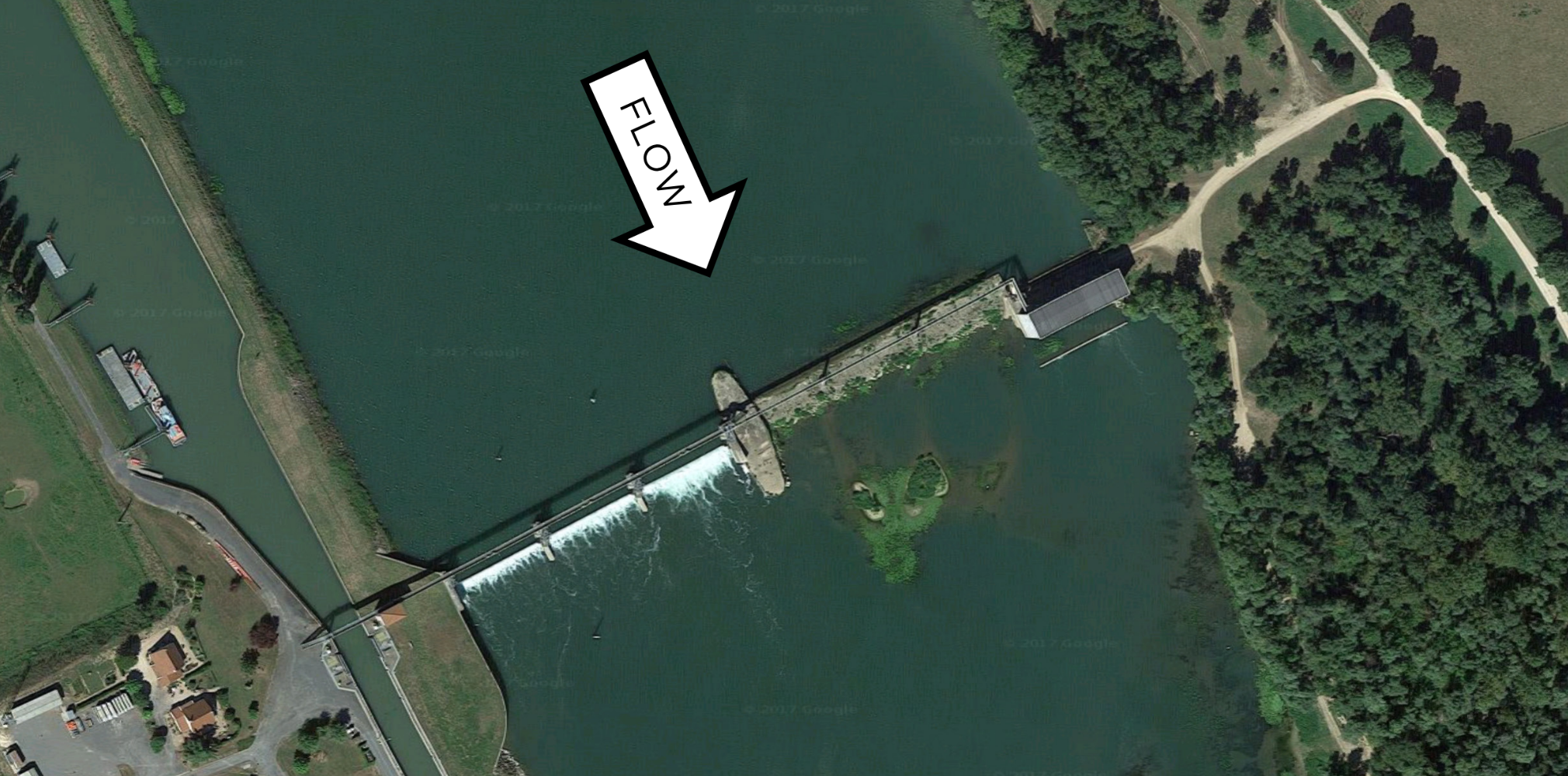
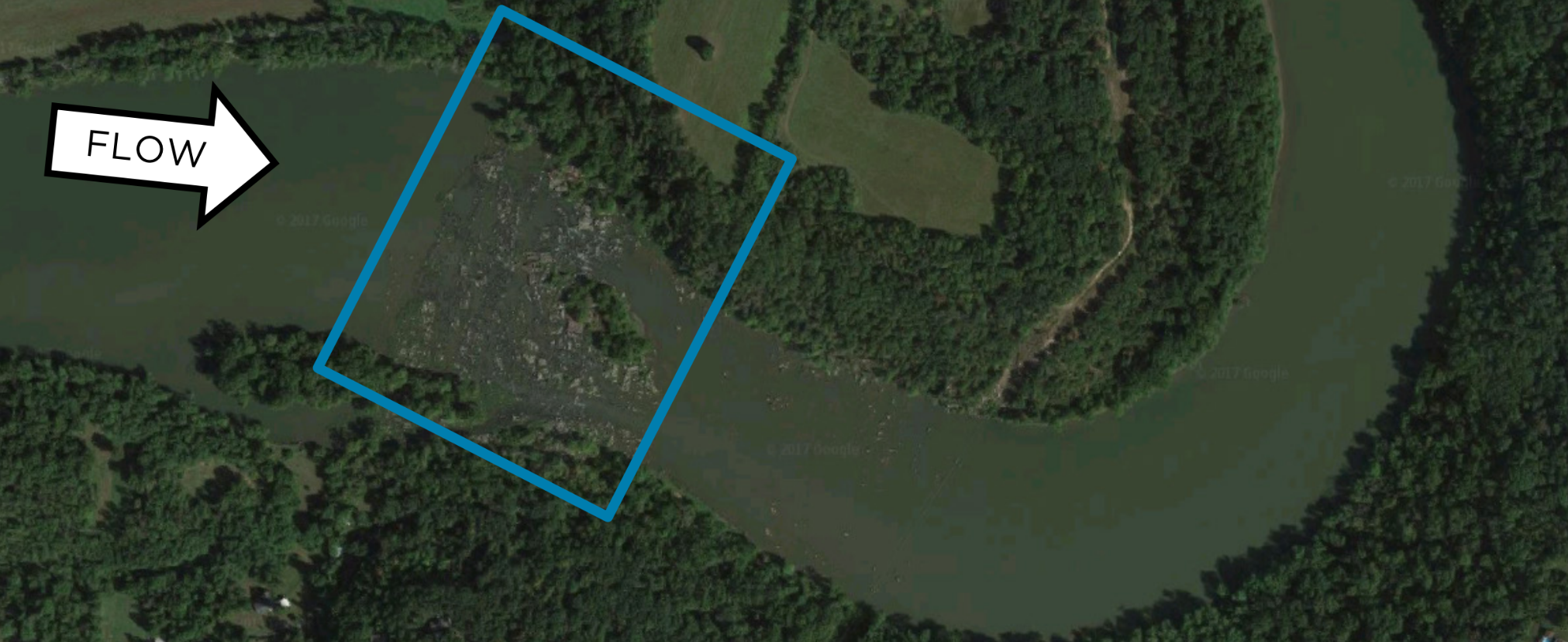
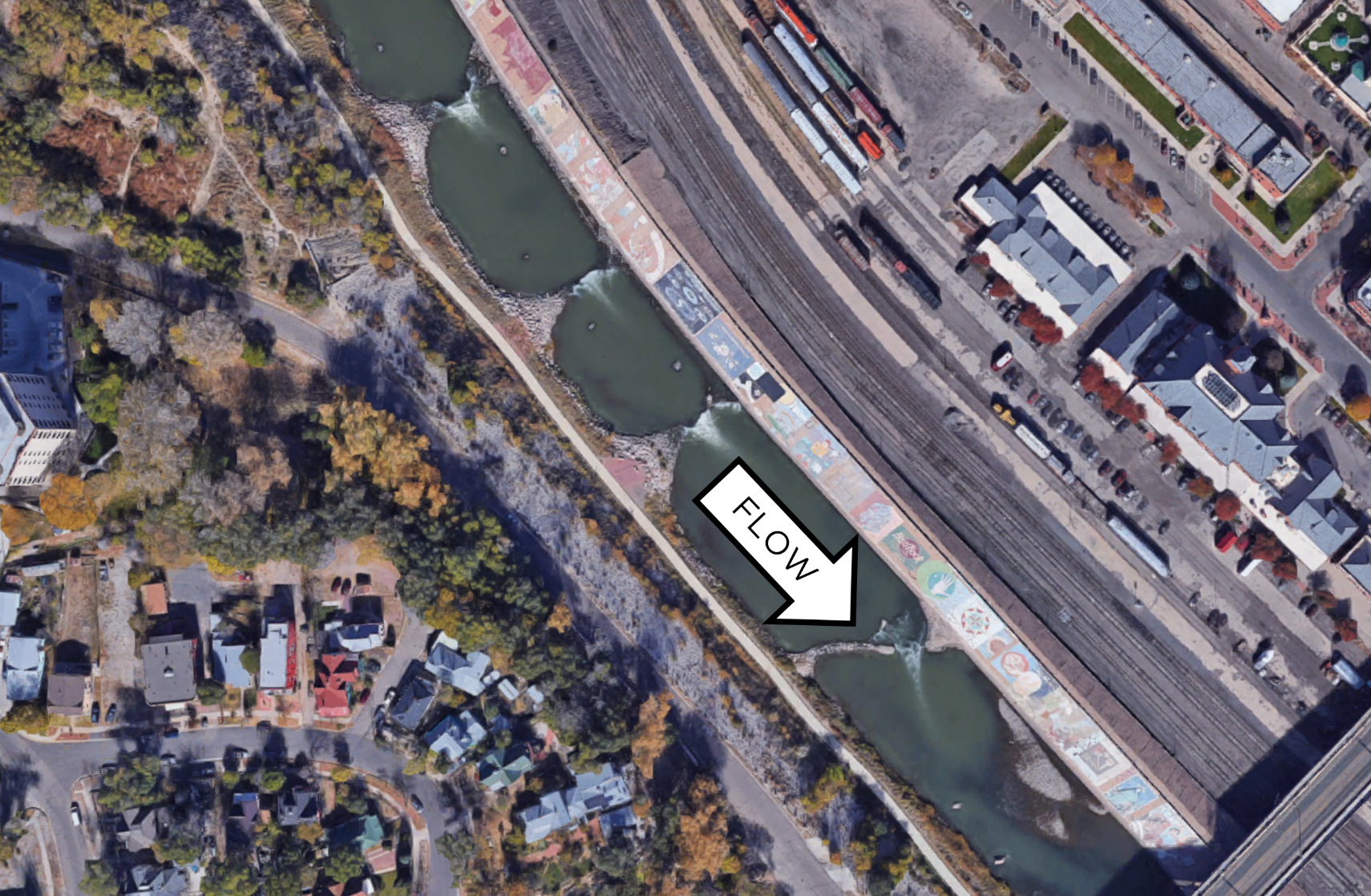
Examples of potential locations
This potential spot is an existing dam. There is clearly an existing drop over a very short section of river. There is road access to the area.
This potential spot is a natural drop in the river. The drop is spreadout over a section of river. There is road access here but it is hidden by trees.
This potential spot is an existing whitewater park. The drops here do not make great waves and can be greatly improved to be excellent river surfing features. This site is in a population centre and has road access.
Site Pictures and Video
Once you have a potential spot or spot(s) identified, visit the site and take some
pictures and video of the area.
Flow Rates
If you are able, get the river flow information for this section of river. Many countries
have river flow gauges that automatically report online and are publicly available.
Initial site review and feedback by Surf Anywhere
When you have all the information, complete the Initial Questions document and return it to Surf Anywhere. Surf Anywhere will review the locations to determine if a wave is possible based on the initial information and provide some next steps.
Related Posts
-
River waves: Fish habitat and boat passage
May 11, 2025