


Kickers and transitions: Elevation, position, and size
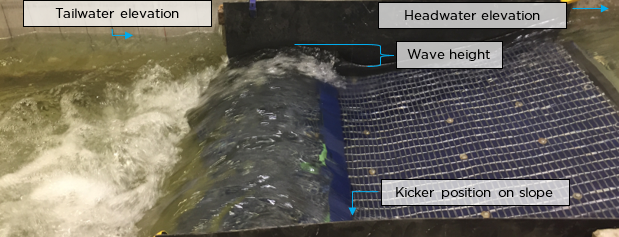
This is an discussion of how kickers and transitions impact river wave formation. Kickers and transitions are the river bottom contours that cause manufactured river waves to form. Kickers and transitions can be adjustable or static. The key factors for shaping a good river wave are size, position, elevation in the tailwater, and angle. The sections in this article are:
- Ideal kicker and transistion elevation
- Diagrams of kicker elevation vs tailwater
- Kicker and transition elevation physical modelling
Key findings are:
- Kickers and transitions should be between 0m and 1.5m below tailwater elevation to create good waves.
- Kicker length should be between 0.5 and 2m. Longer lengths are needed for higher flow intensities to fully develop the trough. A fully developed trough makes the wave higher because the trough is lower and provides more space between the wave face and the water coming into the wave.
- Higher flow intensities create larger waves.
Ideal kicker and transition elevation
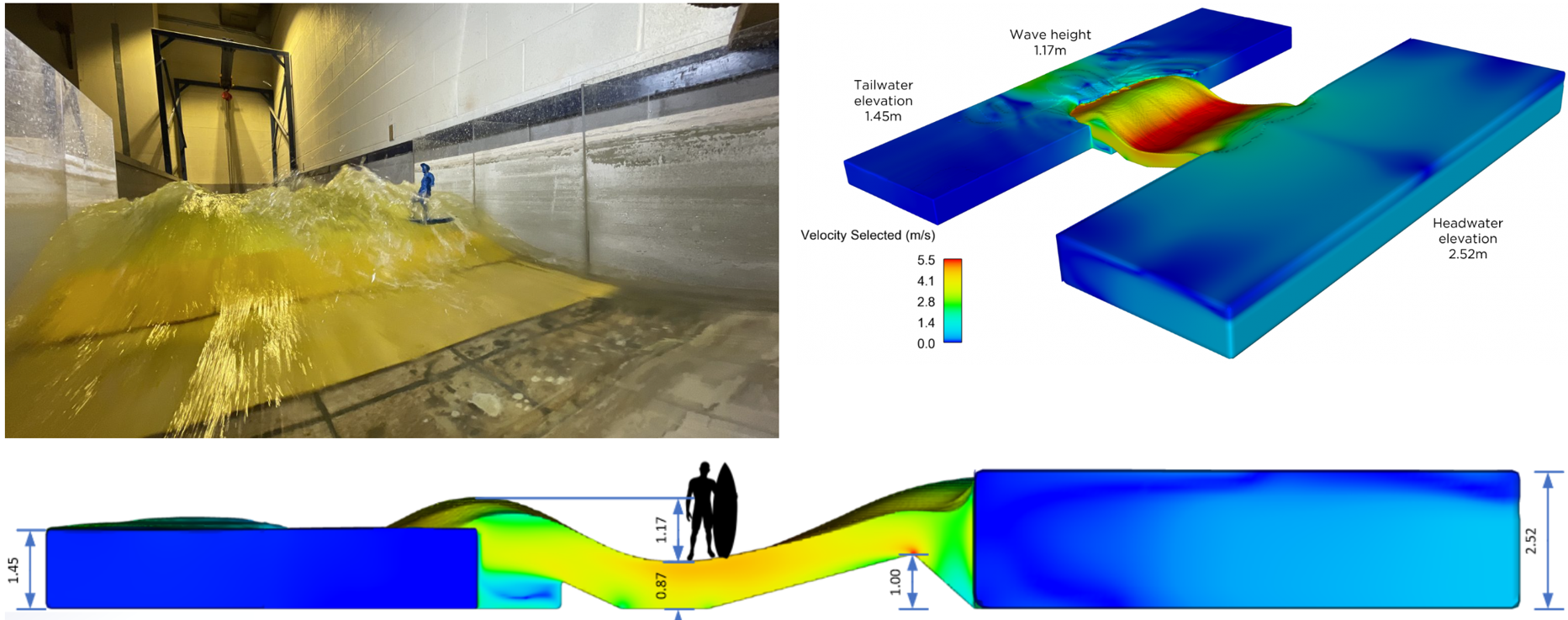
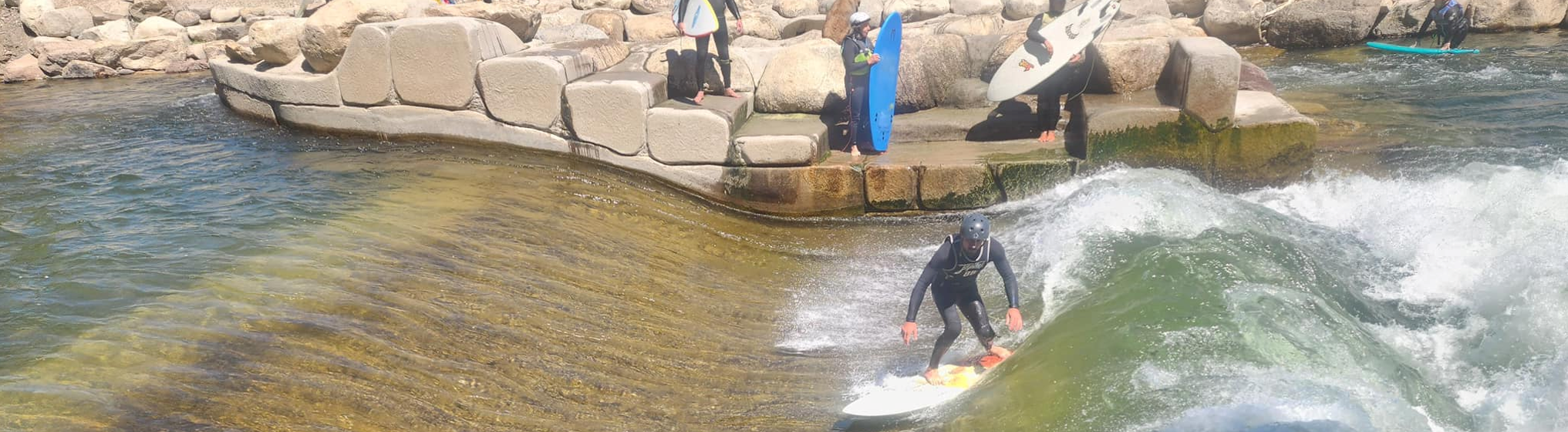
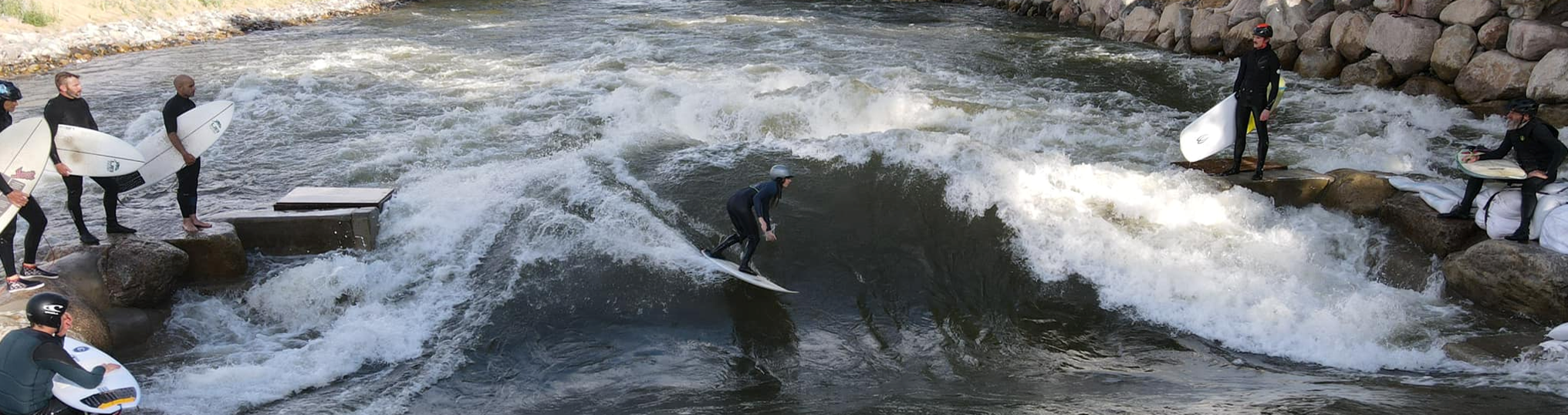
Kickers need to be between 0.0m and 1.5m below tailwater elevation to create good waves. These depths are based on observations of existing waves, physical & Flow3D modelling by Surf Anywhere, the University of Ottawa, the Alberta River Surfing Association, and the Alberta Whitewater Association. Depth of kickers below the tailwater is based on water velocity balancing force of tailwater to make a wave. The deeper the kickers, the better the wave until the kickers are too deep and a wave cannot form.
Diagrams of kicker elevation vs tailwater
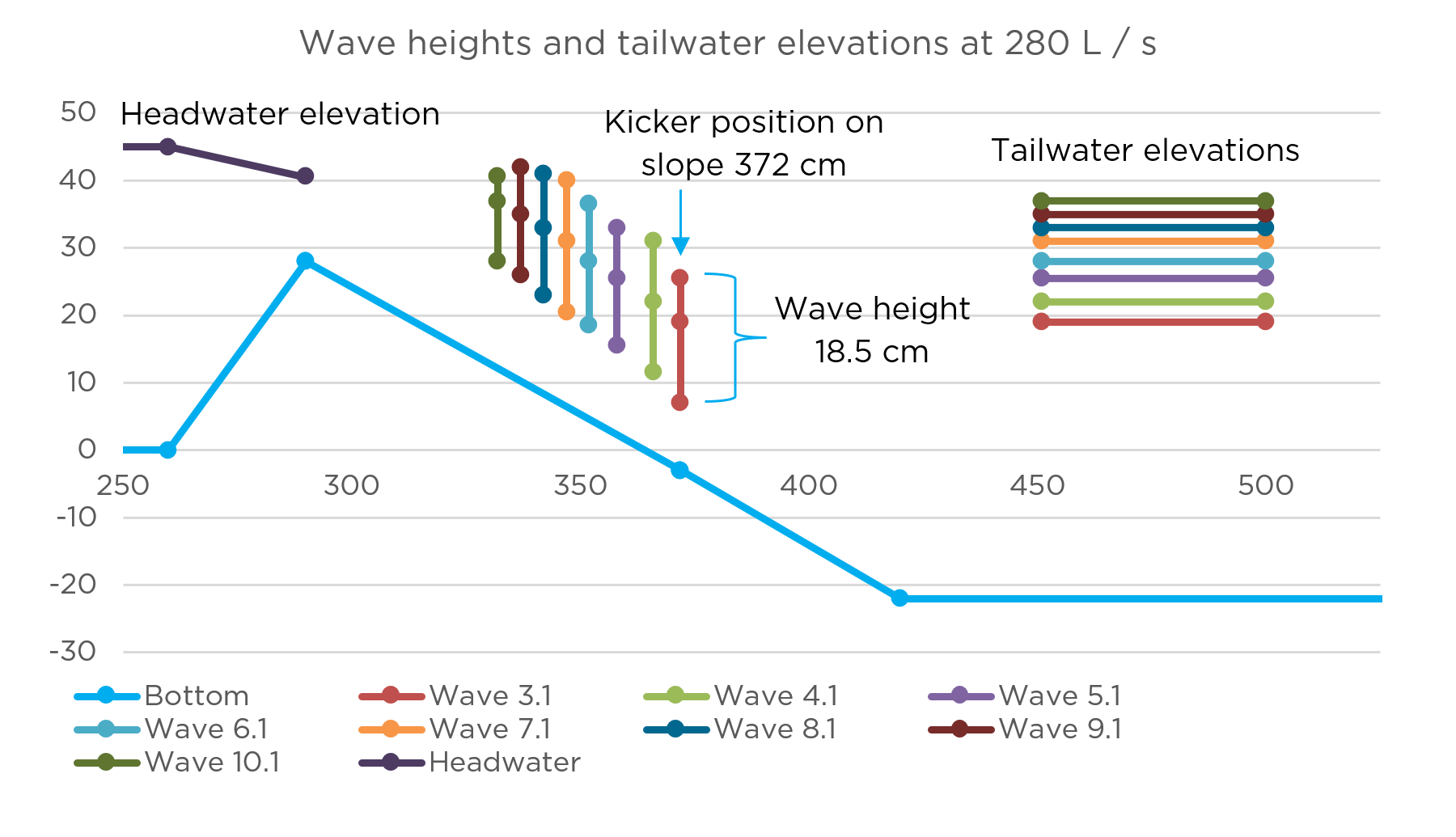
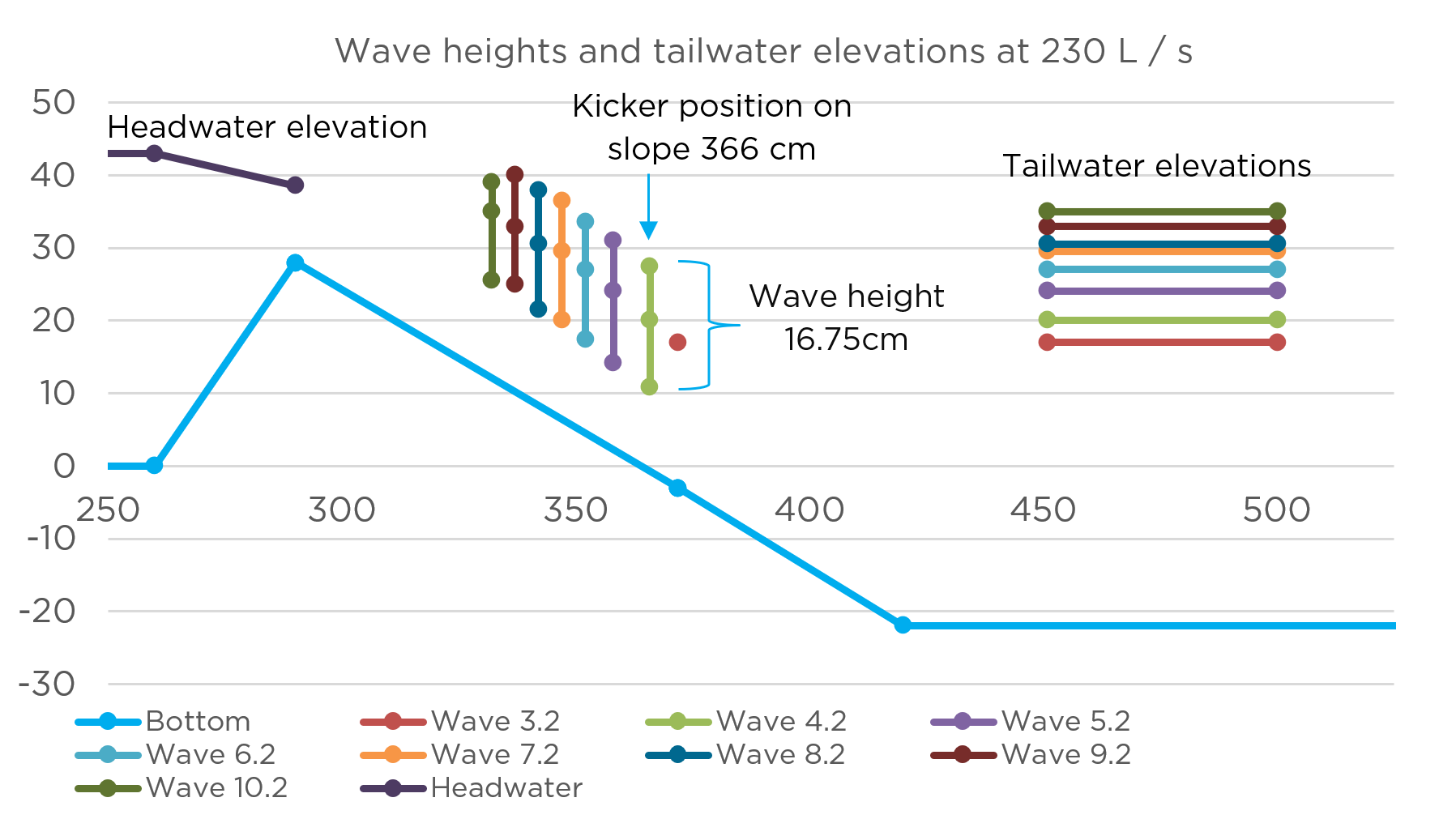
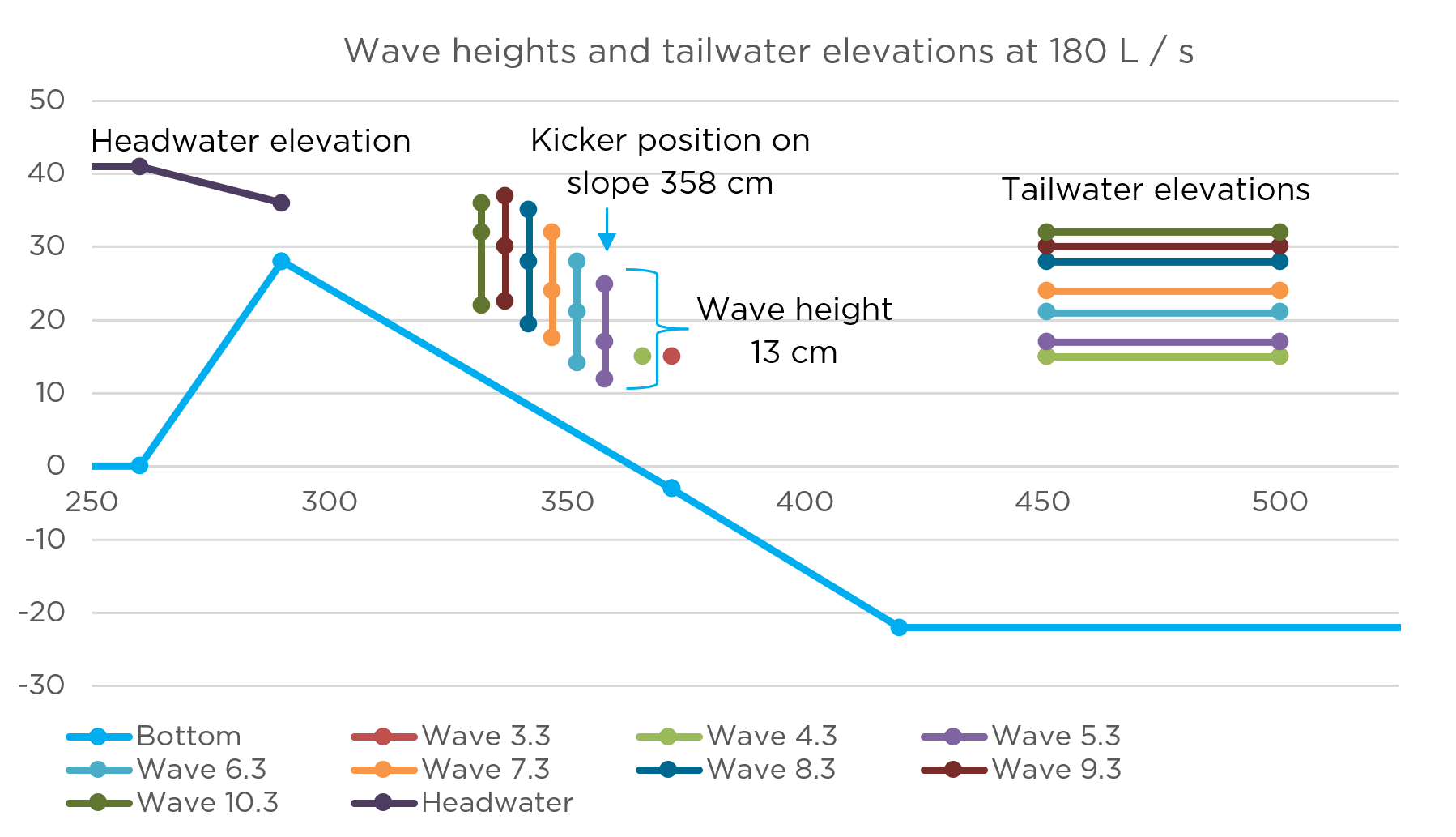
The diagrams below show the change in max wave height and max tailwater elevation as the kicker moves along the ramp. The key points are:
- Wave height decreases as the depth of kickers below tailwater elevations decreases.
- In each graph of a modelling series the flow is constant, and the headwater elevation is constant. Tailwater and kicker elevation are changed to make tallest wave.
- Kicker elevation for the max wave height is well below the tailwater elevation.
- High flow intensities create larger waves.
- Low flow intensities can result in no wave.
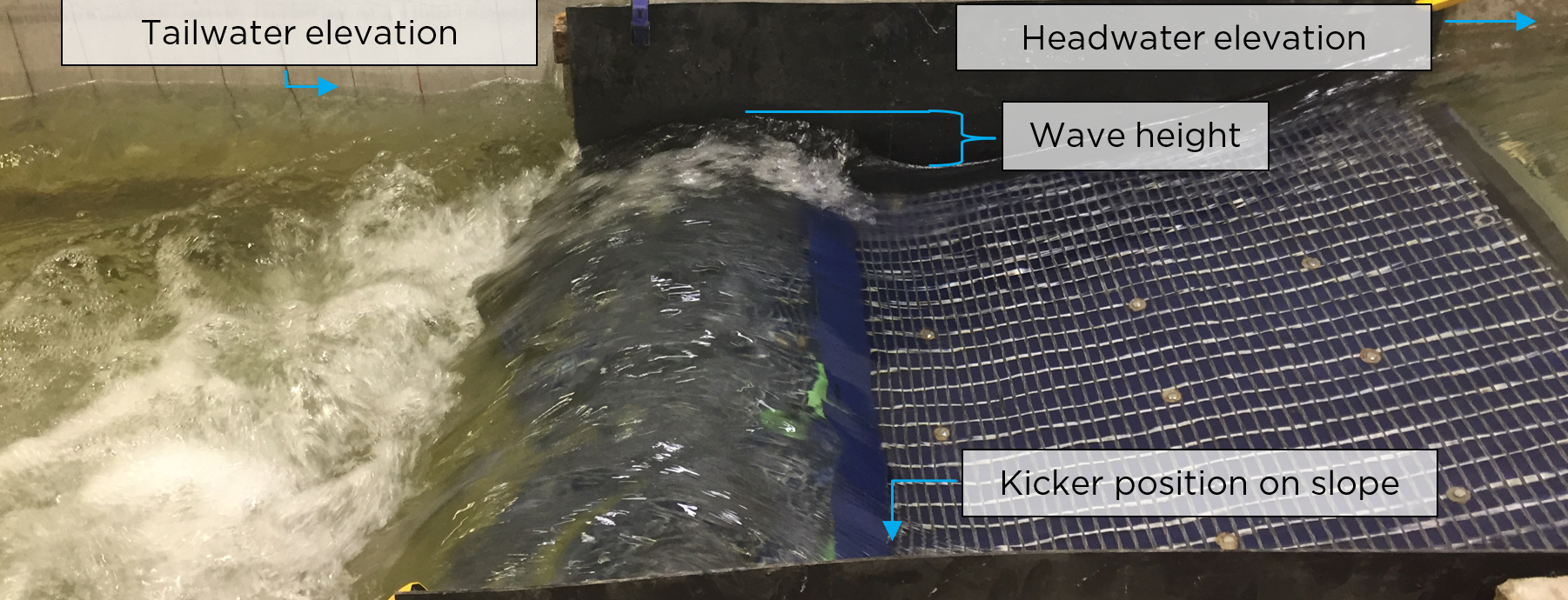
For each image below:
- Shows the results of different tests at each flow with the kicker positioned to give the maximum wave height from trough to peak.
- Each vertical line represents a different test with the kicker at a different position.
- Kicker is attached to the slope directly below each wave height line.
- Bottom point of the wave height is the bottom of the trough.
- Middle point of wave height is the tailwater elevation
- Top point of wave height is the peak of the wave
Kicker and transition elevation physical modelling
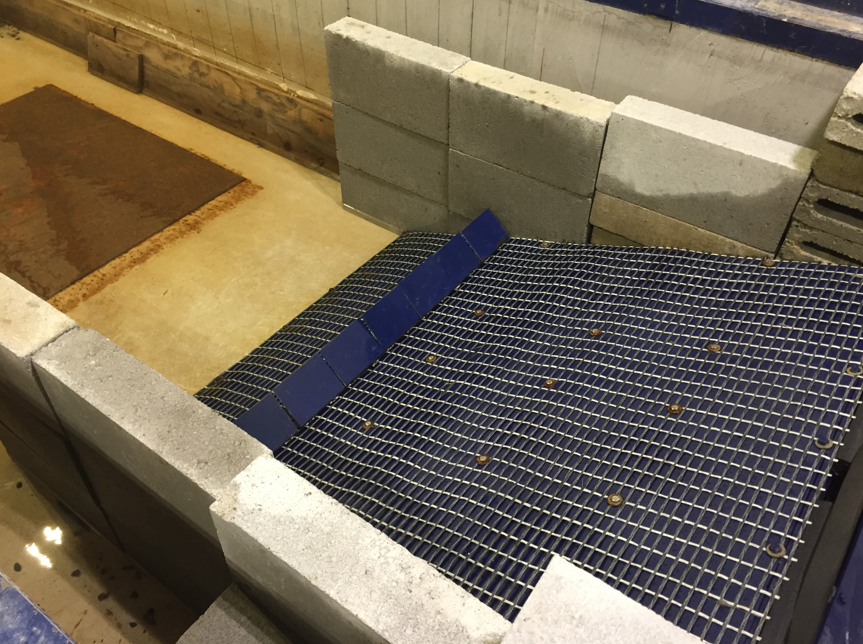
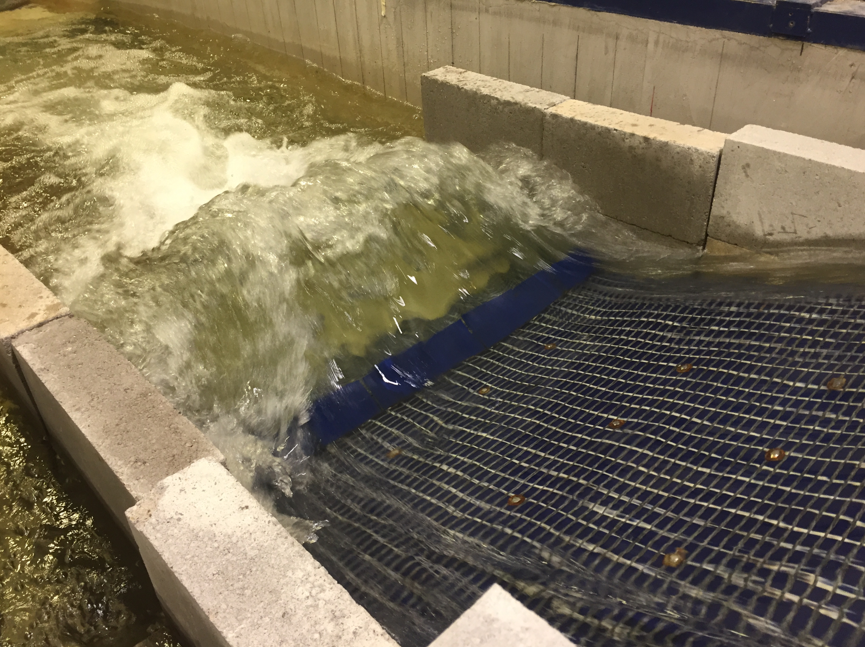
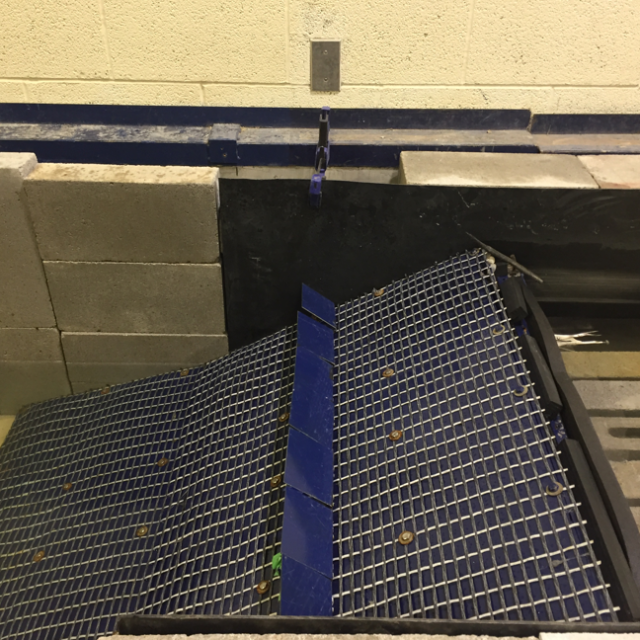
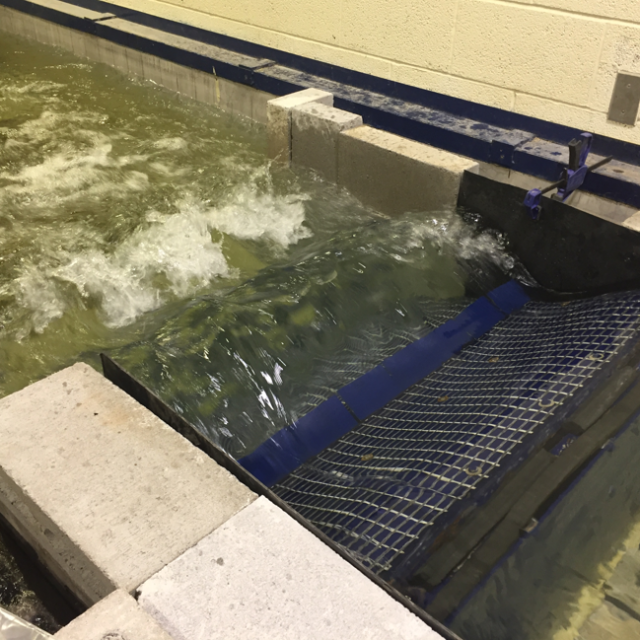
This physical model shows that good waves form at different tailwater positions by moving the kickers up the ramp. The only change during these tests was the kicker position and tailwater elevation.
Related Posts
-

River wave formation at an abrupt drop
September 15, 2023 -

Tailwater effect on waves
February 1, 2022 -

Kayak wave research
November 8, 2021 -

Ramp angles for waves
October 21, 2021 -

Effects of channel walls on waves
October 14, 2021